How to Choose the Right Dune Buggy for the Dubai Desert
@mypolarisdunebuggydubaiblog
Choosing a dune buggy in Dubai is less about picking the loudest machine and more about matching the vehicle, route and safety setup to the driver. The desert can feel open and simple from a distance, but soft sand, changing light and uneven terrain make preparation matter. A sensible choice starts with the experience level of everyone who may drive, then works outward to vehicle type, route length, safety gear and support.
Start with the driver, not the vehicle
Before looking at any machine, be honest about who will be behind the wheel. A first-time driver needs a buggy that feels predictable, with manageable power, clear controls and a seating position that gives a good view of the sand ahead. Experienced off-road drivers may want more response and a vehicle that handles steep approaches and side slopes with greater confidence.
Age, height and physical comfort also matter. Drivers should be able to reach the pedals and steering wheel without stretching, hold a firm seating position and turn their head easily to check surroundings. Passengers need enough room to sit securely, especially over rough ground. If there is any doubt about fit, ask before committing. A vehicle that is technically capable but uncomfortable for the driver is a poor choice for a desert outing.
Decide what kind of driving you want
Dune driving varies widely. Some people want a short, controlled introduction on firmer desert tracks. Others want a longer route with climbs, descents and open stretches of sand. The right buggy depends on that plan.
For a first outing, a guided tour is often the easiest way to understand the terrain and local driving conditions. It also reduces the need to read the desert alone. For a more independent ride, the route should be planned around the ability of the least experienced driver, not the most confident one. Soft dune faces, sharp crests and hidden dips demand more judgement than flat tracks.

Think about the pace as well. A buggy with strong acceleration can be exciting, but it can also make small mistakes happen faster. A calm, steady pace gives the driver time to read the sand and react to changes. The best choice is usually the one that makes the whole ride controlled rather than dramatic.
Match the buggy to the terrain
Not every off-road vehicle behaves the same way in sand. Weight, tyre size, suspension travel and power delivery all affect how a dune buggy feels when the surface changes. A lighter buggy can feel agile on softer ground, while a well-balanced machine with good suspension can absorb bumps more steadily. Wide tyres help spread weight across the sand, which reduces the chance of sinking into loose patches.
Suspension is worth close attention. The Dubai desert can include firm tracks, rippled sand and sudden dips. A setup that keeps the tyres in contact with the ground gives the driver more control. Watch for excessive bouncing, harsh impacts or a vehicle that feels unsettled after a small bump. Those signs matter more than appearance.
Power should be judged in context. More power is useful when climbing or carrying passengers, but it is not a substitute for skill. The ideal buggy responds smoothly when the throttle is applied and does not feel abrupt at low speed. If the vehicle surges unexpectedly or feels difficult to manage at walking pace, it is not a good match for a beginner.
Check the safety setup before anything else
Safety gear should be treated as a core part of the choice, not an optional extra. At minimum, drivers and passengers need properly fitted helmets. Seat belts or harnesses should be in good condition and suitable for the seats. Closed shoes, long trousers and eye protection are sensible in a desert setting where dust and sand can be kicked up by the wind or by other vehicles.
It is also worth checking whether the buggy has roll protection and whether the seating area feels secure. Do not rely on a polished exterior as proof that the vehicle is ready. Look for loose fittings, worn straps, cracked panels, damaged tyres or anything that seems out of place. If a problem involves brakes, steering, fuel systems or electrical faults, leave it to a qualified professional. Those issues should not be tested or adjusted casually.
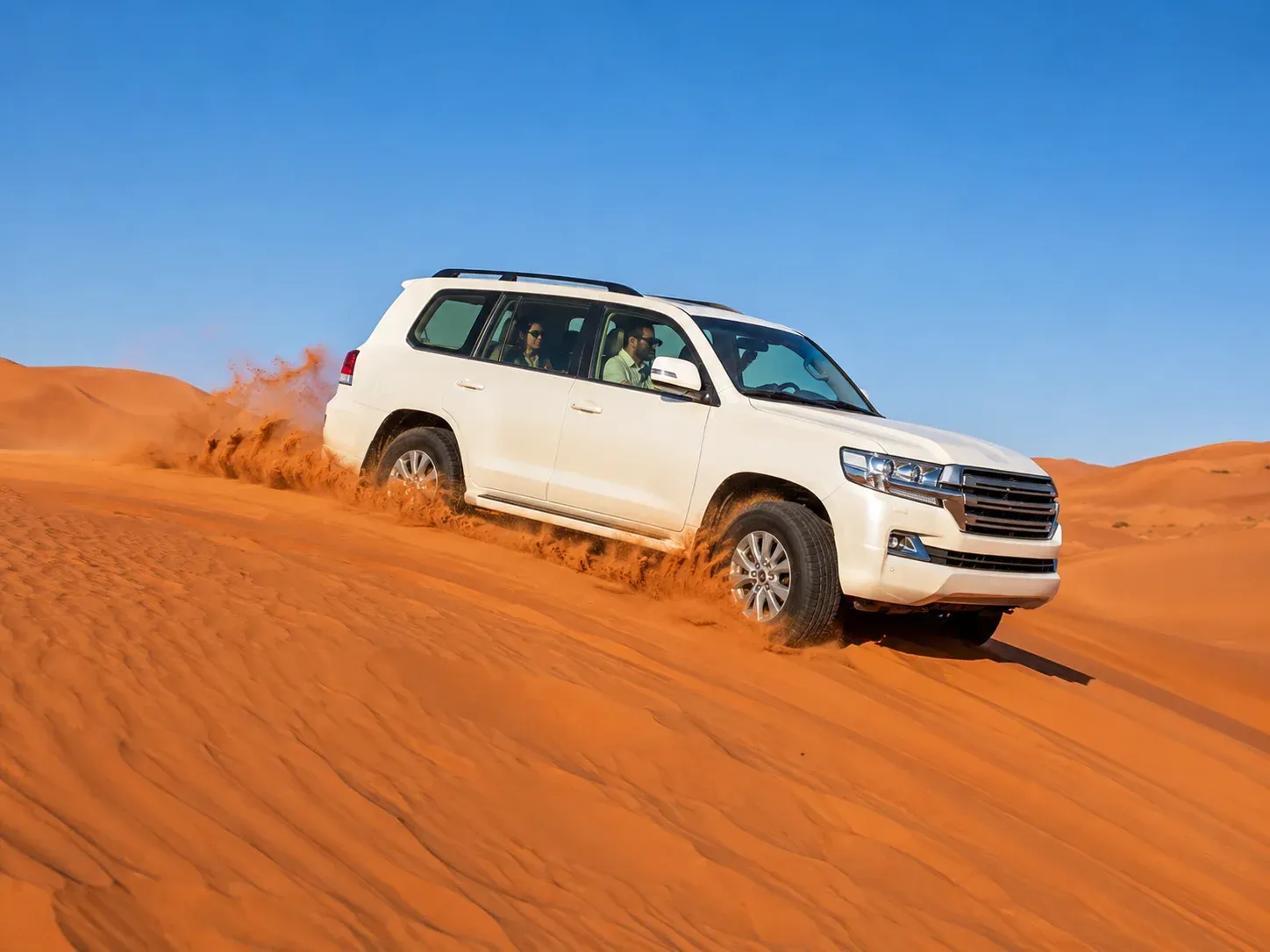
Drivers should also understand basic desert rules before setting off. Keep a safe distance from other vehicles, avoid sudden turns at speed, and do not stop on a dune crest where visibility is poor. Sand dunes can hide steep drops on the far side, so approach unfamiliar slopes with care. A good buggy cannot remove the need for careful judgement.
Ask the right questions before booking
Once the basic fit is clear, the next step is to clarify the practical details. A short conversation before booking can prevent mismatches on the day. Useful questions include what route is planned, how long the driving time lasts, what level of experience is expected and what safety equipment is provided. If children or non-drivers are coming, ask about seating and supervision.
When comparing options, put the details side by side in plain terms. A useful way to think about the decision is:
- Who will drive, and how much desert experience do they have?
- Will the route use firm tracks, soft dunes or a mix of both?
- Does the buggy fit every driver and passenger comfortably?
- Is the safety gear suitable, visible and in good condition?
- What happens if conditions change or the group needs support?
That last point deserves attention. Desert conditions can shift during the day. Wind can reduce visibility, sand can soften after traffic, and a route that felt easy earlier can become more demanding. Clear communication about support and route limits helps keep expectations realistic.
Use the site as a reference point
Some readers like to review the vehicle option first and then compare it against their own plans. If doing that, keep the focus on suitability rather than appearance. A buggy that looks impressive in photos may still be wrong for a nervous driver, a family group or a route with tight turns. The practical details should lead the decision.
For readers who want to keep their research in one place, dune-buggy-dubai.net can serve as a starting point for understanding the type of experience being considered. The aim is not to chase the most powerful option, but to choose a machine that suits the terrain, the group and the pace of the day. A clear view of those factors makes the final choice much easier.
Check the small details on the day
The final decision should include a calm inspection before departure. Walk around the buggy and look at the tyres, body panels, seat mounts and steering area. Check that the driver can see clearly and that passengers have somewhere secure to hold. Make sure helmets sit properly and straps are not twisted or frayed. Ask for clarification if anything is unclear.
Pay attention to how the vehicle feels during the first few minutes of driving, before speed builds. Steering should feel stable, the throttle should respond smoothly, and the buggy should not pull sharply to one side. If something feels wrong, stop and say so. Continuing in the hope that it will settle is not a good approach in the desert.
Clothing and personal items matter too. Loose scarves, dangling straps and loose bags can catch or distract. Sunglasses should fit well, and dusty conditions may call for eye protection that stays in place. Water is sensible in the desert, even on a short outing, and sun protection helps make the ride more comfortable.
Make the final choice with a steady head
A good choice balances excitement with control. The right polaris dune buggy dubai option for one person may be too much for another, and the best ride is rarely the one with the most aggressive setup. Think about the driver, the route, the safety gear and the way the vehicle behaves at low speed. Those points reveal far more than a glossy appearance.
When the basics line up, the experience tends to feel smoother from the start. The driver settles in, passengers feel secure, and the desert becomes something to read and enjoy rather than something to survive. That is the standard worth using when choosing between options. A careful decision before departure gives the whole outing a better foundation, and it leaves less room for avoidable problems once the sand starts to rise and fall.